
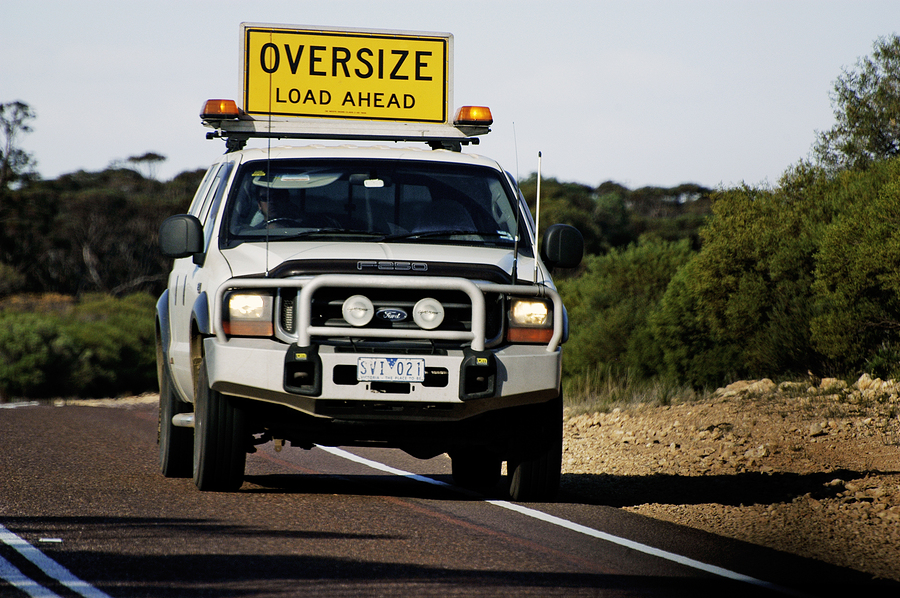
How to become a Pilot Car Driver in Australia: A Complete Guide
Becoming a pilot car driver in Australia is a structured process — but it’s more accessible than many people realise. If you hold a current driving licence and can meet the competency requirements set by your state or territory, you can be accredited and working alongside heavy haulage operations in a matter of weeks.
That said, the role itself is far more involved than simply following a truck down the highway. A pilot vehicle either leads or follows an oversized load, and the driver is responsible for actively scouting hazards, managing traffic, communicating with the heavy haulage driver, and keeping the public safe throughout the move. Large haulage trucks have limited manoeuvrability and long stopping distances — the pilot driver is their advance warning system.
Pilot car drivers must be accredited in the state or territory where they live. Once accredited, they can escort loads interstate, but must comply with all rules and permit conditions that apply in each state they travel through. Here’s exactly what that accreditation process looks like.
Step-by-step: How to get your Pilot Car Driver Accreditation in Australia
Hold a valid Australian or New Zealand driving licence. You’ll need a current open licence, or if you hold a probationary or restricted licence, you must have previously held an open licence. This ensures all pilot car drivers have a demonstrated history of safe, licensed driving before taking on escort responsibilities
Meet the competency requirements — two pathways available. You can satisfy this step in one of two ways: complete a nationally accredited training course and obtain a Statement of Attainment (TLIC3010) for Pilot or Escort of Oversized Vehicles and/or Over-massed Loads through a registered training organisation (RTO), or sit and pass a written competency test at your local Department of Transport and Main Roads office. The training pathway offers a portable qualification; the written test may suit those with relevant prior experience.
Apply for your pilot car driver accreditation. Submit the accreditation application form (F4483) to your local Department of Transport and Main Roads, along with the required application fee. Once approved, you’ll receive a Pilot Vehicle Driver Level 1 licence valid for three years, after which renewal is required.
Getting your pilot car driver accreditation is a straightforward process when you know the steps — and once licensed, it opens the door to a career supporting some of the most complex and critical transport operations on Australian roads.
At Forrest Logistics, every oversized load we move is accompanied by qualified, accredited pilot drivers with real on-road experience — whether we’re hauling heavy machinery across Queensland or coordinating multi-state routes. If you need a trusted transport company in Brisbane to handle your next oversized load safely, we’re ready to help.
What does a pilot car driver actually do? A day in the life
Most people picture a pilot car driver simply following behind a big truck. The reality is far more involved. Pilot drivers are the forward eyes and ears of any oversized load movement — and the safety of the entire operation often depends on their decisions made well ahead of the load.
Here’s what a typical day looks like for a pilot car driver working with a heavy haulage team:
Pre-departure
On the road — lead pilot
Built-up areas and intersections
Escort position — rear pilot
Rest stops and re-routing
End of job
Beyond the driving, strong communication skills, calm under pressure, and a thorough knowledge of road rules and permit conditions are what separate an effective pilot driver from an average one.
Here’s a breakdown of the core responsibilities a pilot car driver carries on every job:
Route knowledge
Radio communication
Hazard identification
Public safety
Permit compliance
Timing management
Curious what working with a professional pilot vehicle team looks like?
How long does it take and what does it cost to get accredited?
One of the most common questions from people considering a career as a pilot car driver is how long the process takes and what they’ll need to invest. While the exact timeline and costs vary depending on the pathway you choose, the state you’re in, and whether you already hold relevant certifications, here’s a general guide to what you can expect.
Training pathway
Assessment option
Licence duration
Application fee
The two main pathways to meeting the competency requirements are:
- Formal training (TLIC3010): Enrolling with a registered training organisation (RTO) to complete the Statement of Attainment for Pilot or Escort of Oversized Vehicles and/or Over-massed Loads. Duration and cost depend on the provider, the format (face-to-face vs. online), and whether any recognition of prior learning (RPL) applies to your background.
- Written test: Sitting the competency test directly at your local Department of Transport and Main Roads office. This may suit those with relevant industry experience who prefer to demonstrate knowledge rather than complete a training program.
In Queensland, you’ll also need to pay the relevant application fee when submitting your accreditation form (F4483). Renewal fees apply every three years. It’s worth checking the TMR website or contacting your state’s transport authority for the most current fee schedule, as these can change.
Overall, most people who pursue the written test route can be accredited within a few weeks of starting the process. The formal training route may take longer depending on RTO scheduling, but offers the added credential of a nationally recognised qualification.
What equipment does a pilot vehicle need?
A pilot vehicle is far more than just a car with a sign on the roof. To be compliant and safe on Australian roads, your vehicle needs to be properly fitted out with the right equipment — both to meet regulatory requirements and to do the job effectively.
Requirements can vary slightly between states and territories, but the following equipment is standard for most pilot vehicle operations in Australia:
Warning signs — “OVERSIZE LOAD” / “WIDE LOAD”
Amber/yellow rotating or flashing beacon
Orange/red flags
Two-way radio communication system
Height pole / clearance measuring equipment
Appropriate PPE and safety gear
Copy of permits and route documentation
Your vehicle itself must also be in good working condition and clearly identifiable as a pilot or escort vehicle. Some states have specific requirements around vehicle colour, signage placement, or additional lighting — always verify requirements with your state’s transport authority before your first escort job.
If you’re thinking about setting up your own pilot vehicle, investing in quality equipment from the start is worthwhile. Poorly fitted or non-compliant equipment can result in failed inspections, permit conditions not being met, and in a worst case, an incident on the road.
Common mistakes new pilot drivers make (and how to avoid them)
Getting your accreditation is the starting point — but experienced pilot drivers will tell you there’s a significant gap between being licensed and being genuinely good at the job. These are the most common mistakes new pilot drivers make, and what to do instead.
Not thoroughly reviewing the route before departure
Poor radio communication habits
Not understanding the permit conditions
Underestimating state-to-state rule differences
Non-compliant or poorly maintained equipment
Rushing through built-up areas
Most of these mistakes come down to experience — and experience comes with time. Working alongside a professional heavy haulage team gives new pilot drivers the mentorship and real-world exposure that accelerates that learning curve significantly.