
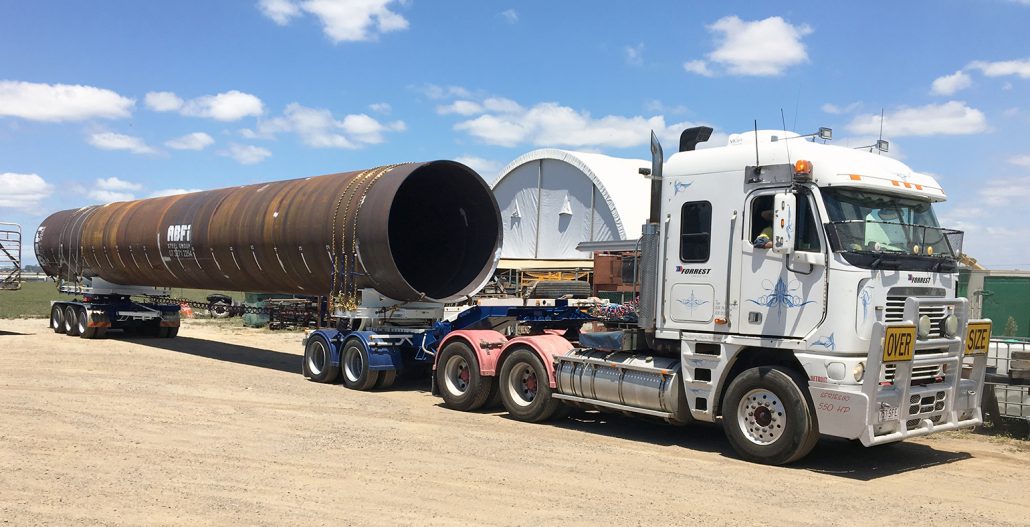
As a logistics company that specialises in oversize transport services, we know that there are a lot of arrangements that need to be completed before you can take to the road. The Queensland Road Transport Department has a long set of rules and regulations that must be followed by whomever is in charge of the transport logistics, as do the other Australian states.
These rules include information concerning travel permits, the type and size of trucks that can be used, safety measures that must be put in place, pilot truck services, who can and cannot drive a pilot vehicle, and areas you can and cannot travel. Let’s take a look at some of these regulations, so you have a better idea of what to expect from our oversize transport services.


Permits
Every oversized load must comply to the relevant guidelines or gazette or obtain a specific single trip permit from Queensland Road Transport, which is based on the designated route. This is why the route must be thoroughly investigated by your logistics team, before applying for these permits.
Type and size of trucks
Any oversize transport services company will know that there are specific restrictions on the height, width and length that can overhang the edges of your truck. Queensland Road Transport is extremely strict on adhering to these rules and will not allow you on the road if your loads are not within the legal limits.
Pilot truck services
Particularly high-risk loads and routes will require the expertise of our pilot truck services on the road. These can be front or rear pilot vehicles and ensure the safety of everyone on the road when an oversized load is en route. A pilot vehicle is also essential when the route includes railway crossings, council roadworks, low-hanging branches, cables, and loads that drive under the posted speed limit due to their size and weight.
Other safety measures
These include safety flags, oversize load signs and wide load banners. There are also rules regarding where you can stop and park your oversized load, when and where you must use low gears to avoid accidents and how much distance you must leave between the pilot vehicle, your oversized truck and the surrounding vehicles.
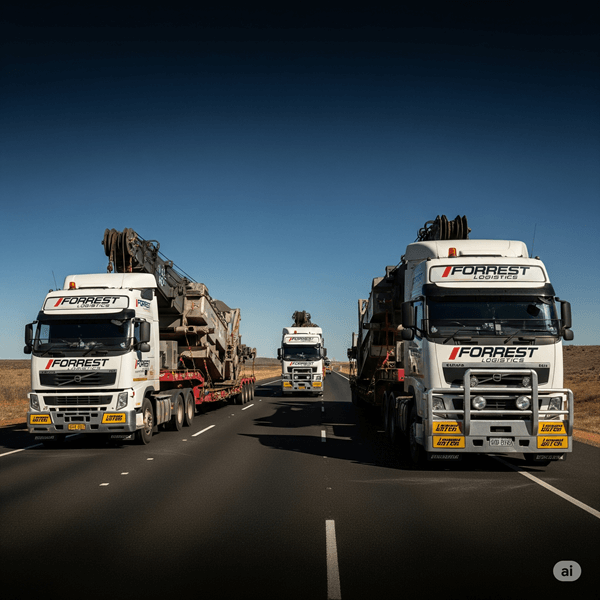
What are the Dimensions of an Oversized Load in Australia
In Australia, the dimensions that constitute an “oversized load” can vary slightly between states and territories, but generally, a vehicle or combination with its load is considered oversized if it exceeds the following basic dimensions:
- Width: Greater than 3.5 meters
- Height: Greater than 4.3 meters (some exemptions for specific vehicle types like livestock carriers can go up to 4.6 meters).
- Length: If the combined overall length of the truck and load exceeds 25m long – this may vary slightly from state to state. Exceeding standard limits for rigid vehicles, semi-trailers, B-doubles, etc.
Can oversize loads travel at night in QLD?
Yes, oversize loads can travel at night, but they are subject to strict legal restrictions and safety protocols.
Key requirements for nighttime transport include:
-
Special Permits: Carriers must hold an explicit nighttime transport permit. Standard daytime permits do not allow after-dark transit.
-
Size Thresholds: Smaller oversize loads may travel freely on approved networks, but larger cargo requires certified pilot (escort) vehicles to guide the route.
-
Enhanced Lighting: Daytime flags must be replaced with active LED perimeter lights. The “Oversize Load” signs must be highly reflective or illuminated, and amber beacon lights must be active on the cabin.
-
Curfew & Weather Restrictions: Travel is instantly suspended if visibility drops below 250 meters due to fog or rain.
Conversely, “superloads” are often legally mandated to travel exclusively between midnight and 5:00 AM to minimize daytime traffic disruptions.
Do oversize loads have the right of way?
No, oversize loads do not automatically have the legal right of way. They must obey the same traffic laws and signals as standard vehicles. However, because of their extreme weight and limited maneuverability, a practical right of way is often yielded to them for public safety.
An oversize load only gains legal priority under specific conditions:
-
Police Escorts: When accompanied by law enforcement, officers can legally block intersections and halt traffic to grant the load continuous passage.
-
Pilot Cars: Certified escort drivers can temporarily control narrow bridges or intersections to safely guide the cargo through tight spaces.
Except during these managed operations, transport operators must yield to traffic and pull over if they cause significant delays. Standard drivers should always give these vehicles a wide berth, as their massive stopping distances make immediate evasive action impossible.
Always consult the latest regulations from the National Heavy Vehicle Regulator (NHVR) and the specific transport department of the state(s) you will be operating in, as rules and requirements can be updated.
If you’re in the market for oversize transport services or a pilot vehicle, you can get a quote online or call Forrest Logistics on 0407 759 483.